Designed for Strength, Comfort, and Longevity

Regain Dental Strength With Restorative Dentistry in Wollongong

Missing or worn teeth don’t need to hold you back. Our restorative treatments help you speak, smile, and chew comfortably, maintaining long-term function, appearance, and confidence with tailored, evidence-based care.

restorative hero banner min
restorative top min

Discover How Restorative Dentistry Supports Your Smile

A stable smile plays a key role in eating, speaking, and daily comfort. When teeth are affected by damage or loss, restorative dental care provides options to reinforce strength and restore natural form.

Restorative treatments may help distribute bite pressure evenly and contribute to long-term oral health. Addressing structural changes early on can also reduce the risk of complications involving surrounding teeth, jaw alignment, or gum tissues over time.

Identifying the Right Candidate for Restorative Treatment

Restorative dentistry may suit individuals experiencing tooth wear, decay, or missing teeth that affect comfort, appearance, or long-term oral health.

restorative dentistry right candidate
dental implants dashboard benefits

Everyday Benefits of Restorative Dental Care

Restorative dental care offers everyday benefits by improving oral function, comfort, and confidence through carefully planned, evidence-based treatment approaches.

Restorative Dentistry Services at Illawarra Dentists

Tooth damage and loss can affect everyday comfort and function. Illawarra Dentists offers restorative dentistry in Wollongong to help improve strength, chewing function, and dental stability.

Dental Implants

Dental implants act as artificial tooth roots embedded in the jaw. Our dental implants Wollongong service supports crowns or bridges and assists with everyday function, jaw health, and surrounding tooth preservation over time.

All-on-4 Implants

This treatment replaces a full row of missing teeth using four implants placed at precise angles. As an experienced All-on-4 implants Wollongong provider, we focus on restoring stability, chewing ability, and natural-looking results.

Full-Mouth Rehabilitation

When multiple teeth are affected by trauma, decay, or grinding, full-mouth rehabilitation may be recommended. This treatment combines various restorative dental procedures and techniques to restore strength, comfort, and overall oral function.

Crowns and Bridges

Dental crowns and bridges are custom restorations used to restore or replace damaged or missing teeth. Crowns cover and protect weakened teeth, while bridges fill gaps by anchoring to nearby teeth or implants for stability.

Dentures

We offer dentures Wollongong patients can use to replace multiple missing teeth. These removable appliances are shaped for daily comfort and function, helping sustain speech, chewing, and overall facial balance without surgical procedures.

Book Your Dental Visit With Confidence

Feel supported at every step. Our team offers professional guidance so you can make informed decisions with confidence.
allon4b
allon4b

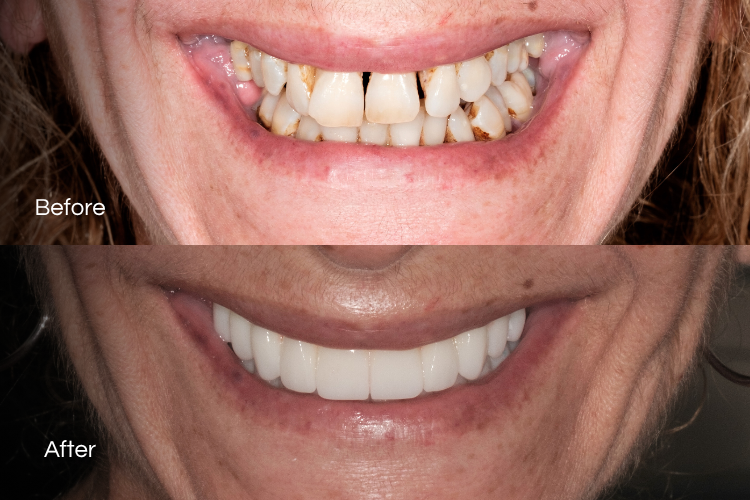
*These images display actual patients of our clinic. Every case is different, and treatment outcomes can vary according to individual conditions and needs.

Why Choose Illawarra Dentists for Your Dental Care

Reliable and professional dental care across three trusted locations, offering quality service, modern techniques, and a commitment to patient comfort every visit.

care that feels like family

Care That Feels Like Family

We believe great care starts with listening. Our team of dentists takes time to understand your concerns, explain options clearly, and prioritise your comfort at every step. With a gentle approach, we build long-term relationships with patients of all ages, from toddlers to grandparents. It’s the kind of care that grows with you—always personal, always thoughtful, and always delivered with genuine warmth.

experience team you can rely on

Experienced Team You Can Rely On

Across all locations, our team brings decades of combined experience in preventive, restorative, and cosmetic dentistry. Whether you need a routine check-up or complex dental work, we’re committed to consistent, high-quality care delivered by people who genuinely enjoy what they do. You’ll benefit from trusted hands, collaborative advice, and a team that values your long-term oral health goals.

modern clinics with a local touch

Modern Clinics With a Local Touch

Our clinics are equipped with digital scanners and intraoral cameras, and our team uses the latest techniques to provide accurate and efficient dentistry. But what really sets us apart is our warm, community-based feel, where you’ll always be greeted by a friendly face that remembers your name. We combine advanced dental care with genuine connection, so your experience feels easy, familiar, and stress-free every time.

What Our Happy Patients Say
About Us

Our patients love the care they receive—professional, friendly, and life-changing smiles
that boost confidence and overall dental health.

Excellent dentist and ran through everything with me in detail

Simone Peckman

Thank you for your quality dental work and information, it was very helpful and informative.

Rob Pet Ski

Can not recommend enough, Friendly, gentle and affordable

Jessi S

On time, did what was needed very well including photos and clear explanation of required follow-up. And good professional manner from whole team.

Peter Austin

Great service and very friendly. Especially with my kids.

Roslyn Potter

Lovely staff and the dentist explained everything . Very happy with the overall service

Renee Jeffries

Meet the Team Who Cares for Your Smile

Friendly, experienced, and committed to your care, our team works together to deliver quality, modern dentistry in a supportive environment.

Frequently Asked Questions

This section provides clear information about restorative dentistry. Each answer aims to explain common treatments and how they can improve your comfort, function, and oral health.

If you're considering restorative dentistry in Wollongong, you might be wondering what types of treatments it includes and whether they suit your needs. These procedures address teeth that are damaged or missing due to decay, injury, or wear. They are designed to promote long-term oral health while helping you remain comfortable when eating, speaking, and smiling.

Here are common restorative treatments:

  • Dental Fillings: Fillings are used when a tooth has been affected by decay. Once the decayed portion is carefully removed, the tooth is restored using a filling material, like a tooth-coloured composite resin, to rebuild its form and support normal function. This helps protect the tooth from further damage.
  • Dental Crowns: A crown is a custom-made cap that fits over a tooth that has been weakened by damage or extensive dental work. It covers the tooth, reinforcing the remaining structure. Crowns can be made from materials like porcelain, ceramic, or metal and are shaped to match your natural teeth.
  • Bridges: A bridge replaces one or more missing teeth by anchoring artificial teeth (pontics) to the adjacent teeth. These neighbouring teeth are usually fitted with crowns that support the bridge. This helps maintain proper bite alignment and prevents nearby teeth from shifting.
  • Dental Implants: A dental implant is a small titanium post surgically embedded into the jawbone where a tooth is missing. Over time, the implant integrates with the surrounding bone, forming a stable base for a crown, bridge, or denture. As a dental implants Wollongong provider, we offer options tailored to patients with healthy gums and sufficient bone support for long-term stability.
  • All-on-4 Implants: This technique uses four dental implants to anchor a full-arch bridge, offering an alternative to traditional dentures. At our clinic, the All-on-4 implants Wollongong patients receive are designed to support long-term comfort and stability after significant tooth loss.
  • Inlays and Onlays: These are custom-made restorations made from ceramic or composite resin. An inlay fits within the grooves of the tooth, while an onlay covers one or more of the chewing surfaces. They are typically recommended when a dental filling is insufficient for strength, yet a full crown is not necessary to restore the tooth.
  • Dentures (Full or Partial): Dentures are removable appliances used to replace several or all missing teeth in the upper or lower arch. Partial dentures are used when some natural teeth remain, while full dentures are fitted when no natural teeth are present. We offer dentures Wollongong patients trust to support chewing, speaking, and facial balance.

Restorative dental care is often recommended when teeth are affected by the following:

  • Tooth decay and pulp damage: Decay can break down the enamel and spread deeper, potentially affecting the pulp—the soft tissue that contains the nerves—and causing pain. Treatment may involve fillings, crowns, or root canal therapy, depending on the extent of the damage.
  • Broken or worn teeth: Injury, grinding, or erosion can cause structural damage. Dental restoration options such as crowns, onlays, or bonding help rebuild the tooth and support normal bite function.
  • Missing teeth: Gaps from missing teeth can affect chewing, speech, and alignment. Restoring them with implants, bridges, or dentures can support daily function and prevent neighbouring teeth from shifting.
  • Old or failing restorations: Over time, existing fillings, crowns, or bridges may become worn, loose, or damaged. Replacing compromised restorations helps protect the tooth underneath and maintains proper function and comfort.

Yes, fillings are a common component of restorative dentistry. They can play an important role in your long-term oral care in several ways:

  • Address areas of decay: When a cavity forms, the affected part of the tooth is removed and replaced with a filling. This helps reduce the spread of decay and the risk of further damage.
  • Rebuild the tooth’s structure: A filling restores the natural shape of the tooth so that it can continue to function comfortably when biting or chewing.
  • Protect the inner layers of the tooth: By covering exposed areas, fillings can reduce the chance of bacteria reaching deeper parts of the tooth.
  • Blend with natural teeth: Composite resin fillings are chosen for their strength and natural appearance, allowing the dental restoration to blend seamlessly with your teeth for a more natural result.

Reduce the likelihood of further intervention: Addressing a cavity early with a filling may help preserve more of the natural tooth. It also reduces the chance of needing more complex procedures in the future.

Yes, root canal therapy is considered a form of restorative treatment. It's usually recommended when the tooth pulp becomes inflamed or infected due to deep decay, cracks, or trauma. The procedure removes the damaged tissue, cleans the canals, and seals the space to reduce the risk of reinfection.

By preserving the outer tooth structure, root canal therapy allows you to continue using the tooth for chewing and speaking, often avoiding the need for extraction. It supports long-term oral function and may reduce the need for more complex tooth replacement options.

Yes, fillings are a common component of restorative dentistry. They can play an important role in your long-term oral care in several ways:

  • Address areas of decay: When a cavity forms, the affected part of the tooth is removed and replaced with a filling. This helps reduce the spread of decay and the risk of further damage.
  • Rebuild the tooth’s structure: A filling restores the natural shape of the tooth so that it can continue to function comfortably when biting or chewing.
  • Protect the inner layers of the tooth: By covering exposed areas, fillings can reduce the chance of bacteria reaching deeper parts of the tooth.
  • Blend with natural teeth: Composite resin fillings are chosen for their strength and natural appearance, allowing the dental restoration to blend seamlessly with your teeth for a more natural result.

Reduce the likelihood of further intervention: Addressing a cavity early with a filling may help preserve more of the natural tooth. It also reduces the chance of needing more complex procedures in the future.

The process for receiving a dental restoration can vary depending on the type of treatment and the condition of your tooth. It usually follows these key steps:

  • Initial consultation and assessment: Your dentist will examine your teeth and discuss any symptoms or concerns. They may also take X-rays to assess areas that aren’t visible during the clinical exam.
  • Treatment planning: After reviewing the findings, your dentist will outline the type of restoration suitable for your needs. You’ll also be informed about what to expect during each stage, including costs and appointment timing.
  • Tooth preparation: The affected area is cleaned and shaped so that the restoration can be placed securely and support normal function during eating or speaking.
  • Placement of the restoration: Some treatments, such as fillings, may be completed during the same visit. Others, such as crowns or inlays, are custom-made and fitted at a follow-up appointment.
  • Final checks and care advice: Your dentist will assess how your teeth come together and adjust the restoration if needed for comfort. You’ll also receive advice on how to care for the restored tooth at home.

Dental restorations are intended to help maintain tooth function over time. They can gradually wear with use and may need replacement after several years, depending on the following factors:

  • Type of restoration: The expected lifespan varies depending on the treatment. For example, the titanium post in a dental implant may last 20 years or more when supported by healthy gums and bone. The parts attached to it, such as a crown, bridge, or denture, usually last between 5 and 15 years.
  • Bite pressure and chewing habits: Clenching, grinding, or chewing hard foods and items, such as pens, ice, or fingernails, can place unnecessary force on restorations and cause them to wear more quickly.
  • Oral hygiene and regular check-ups: Daily brushing and flossing help protect surrounding teeth and gums. Routine dental visits also allow early detection of any changes that could affect the tooth restoration.
  • Diet and lifestyle: Consuming acidic or sugary items can contribute to decay and enamel erosion, potentially shortening the lifespan of a restoration. These include soft drinks, fruit juice, lollies, citrus fruits, wine, and sports drinks.

Tooth restoration is generally well tolerated, and discomfort is usually mild and temporary. Here’s what you can expect at each stage:

  • Before the procedure: Feeling anxious is common, especially if it’s your first time. Your dentist can guide you through the process and offer strategies, such as taking short breaks or practising breathing techniques, to help you feel more comfortable.
  • During the procedure: A local anaesthetic is used to numb the area around the tooth. This will prevent you from feeling pain, but pressure and movement can still be felt. If you experience any discomfort, notify your dentist immediately.
  • After the procedure: You may notice mild sensitivity to hot, cold, or pressure for a few days. If discomfort continues or your bite feels off, contact your dentist for a check-up.

Recovery times can vary from person to person. While many people return to their normal routine the same day, others may need a few days to adjust, especially after more complex procedures. Several key factors can influence how quickly you recover.

  • Type and complexity of treatment: Minor procedures like small fillings usually involve little to no downtime. More complex treatments, such as implants or full-mouth rehabilitation, may cause mild discomfort or require a longer adjustment period, depending on your response.
  • Size and location of the restoration: Larger restorations, or those placed on back teeth that are exposed to higher chewing forces, may lead to more sensitivity and take longer to feel comfortable.
  • Your oral health at the time of treatment: If the surrounding tooth or gum tissue is already inflamed or compromised, recovery may take longer and may require extra care during the healing period.
  • Teeth grinding or clenching (bruxism): Continuous pressure from grinding can irritate the restored area and slow the adjustment process. Your dentist may recommend a night guard to reduce stress on the tooth.
  • At-home care and follow-up: Following your dentist’s instructions for brushing, eating, and symptom monitoring can help achieve a smoother recovery. Delays in follow-up care or inconsistent oral hygiene may impact the rate of healing in the affected area.

Restorative dentistry involves the use of different materials depending on the type of procedure, the position of the tooth, and your specific oral health needs. Each material has unique characteristics related to its strength, appearance, and durability over time.

Common materials used in restorations include the following:

  • Composite resin: This tooth-coloured material is frequently used for dental fillings. It has a natural appearance and is often selected for smile restorations in visible areas that require a conservative approach.
  • Porcelain: Porcelain is often selected for crowns and inlays/onlays, particularly on front teeth, due to its tooth-like colour and resistance to staining.
  • Zirconia: Zirconia is a strong type of ceramic used in the fabrication of dental crowns and bridges. They are usually used in areas that require extra strength, such as molars.
  • Gold alloy: Gold is valued for its strength and durability. It’s commonly used in crowns and inlays for back teeth, which are exposed to heavier biting forces. While it doesn’t match tooth colour, it wears well and is gentle on opposing teeth.

Yes, both dental crowns and bridges are types of restorative dental treatments. They are designed to rebuild the structure and restore the function of teeth that have been damaged or lost and may also enhance appearance when suitable.

Here’s how each treatment is used in restorative dental care:

  • Crowns: A crown is a custom-made covering placed over a tooth that has been weakened by decay, injury, or following a large filling or root canal therapy. It is designed to rebuild the tooth's shape and support everyday functions, such as biting and chewing.
  • Bridges: A bridge is used to replace one or more missing teeth. It includes an artificial tooth (or teeth) held in place by crowns on the adjacent teeth. Bridges can help stabilise nearby teeth, support your bite, and assist with speaking and chewing.

Yes, restorative dentistry offers several ways to replace missing teeth after a full-mouth extraction. These options are tailored to restore comfort, function, and overall oral well-being.

Common restorative options after a full-mouth extraction include the following:

  • Full dentures: These removable appliances are shaped to fit the upper or lower arch. They can assist with chewing, improve speech, and help maintain the shape of the lips and cheeks.
  • Implant-retained dentures: This type of denture is stabilised by a small number of implants placed in the jawbone. The denture remains removable but tends to feel more secure during speaking and eating compared to conventional dentures.
  • Full-arch implant bridges (e.g., All-on-4): This treatment involves placing multiple implants to support a bridge that stays in place. It may be an option for suitable candidates seeking a non-removable alternative. 

Dental restorations are commonly used and generally well tolerated. However, like any dental procedure, they can carry some risks or side effects. These are usually discussed with you before treatment, so you understand what to expect.

Possible side effects or risks include:

  • Tooth sensitivity: It’s not unusual to feel mild sensitivity to temperature changes or pressure shortly after a filling, crown, or inlay. This often settles within a few days.
  • Discomfort or bite changes: A restored tooth may feel high or uneven when biting. If this happens, your dentist can trim the restoration to improve how your teeth come together.
  • Irritation to nearby tissues: Gums or soft tissues around the restored area may feel tender, particularly after a larger restoration or temporary crown.
  • Allergic reactions (rare): Although uncommon, some individuals may experience a reaction to certain materials, such as metal alloys. Your dental team will ask about any known sensitivities beforehand.

If you're concerned about the risks, it’s worth discussing your situation with our team. We provide restorative dentistry in Wollongong with care plans based on your oral condition and treatment goals.

For many people, restorative dentistry is worth the cost due to its long-term benefits. Addressing dental problems like decay, damage, or missing teeth early can prevent the need for more extensive and expensive treatments later. It also promotes daily comfort, function, and overall oral health.

Restorative care helps preserve natural teeth, protect surrounding structures, and improve quality of life. With various treatment options available, many patients find the investment worthwhile, considering their specific needs and goals.

Yes, restorative dentistry can improve both the function and appearance of your teeth. Below are the ways it may help:

  • Supports everyday function: Restorative treatments help rebuild the structure of damaged or missing teeth, making it easier to eat, speak, and use your teeth comfortably in daily life.
  • Helps stabilise the surrounding teeth: Replacing missing teeth can prevent nearby teeth from shifting, which maintains overall alignment and jaw function.
  • May enhance appearance in visible areas: Tooth-coloured materials like composite resin or ceramic are often chosen for their natural appearance. These options can enhance smile restoration when front teeth or other visible areas are affected.
  • Helps prevent facial sagging: Dentures or implants can help maintain facial contours by providing structural support to the lips and cheeks, reducing the appearance of sagging.
Book An Appointment